Iron acetate alone
Treat a bare sample with iron acetate to see how the wood's own tannins respond. Let the reaction develop and dry before comparing it.
Ebonizing is an iron–tannin reaction, not just a black stain. Dissolved iron reacts with tannins in the wood to develop deep brown, charcoal, or black color while the grain and texture remain visible. Quebracho supplies additional tannin when the wood needs more of the other half of the reaction.
This reference grew out of an in-person ebonizing demonstration. Explore the chemistry and class comparisons, then return to Gaia's Woodcrafts for finished work and more about the maker.
Download the Ebonizing Wood Guide, PDFThe original four-page class handout opens directly as a PDF. It is unchanged from the supplied document.
Vinegar dissolves iron from steel wool. That dissolved iron reacts with tannins in the wood to form dark iron–tannin compounds. A Quebracho wash supplies extra tannin: apply it, allow it to dry, then apply iron acetate.
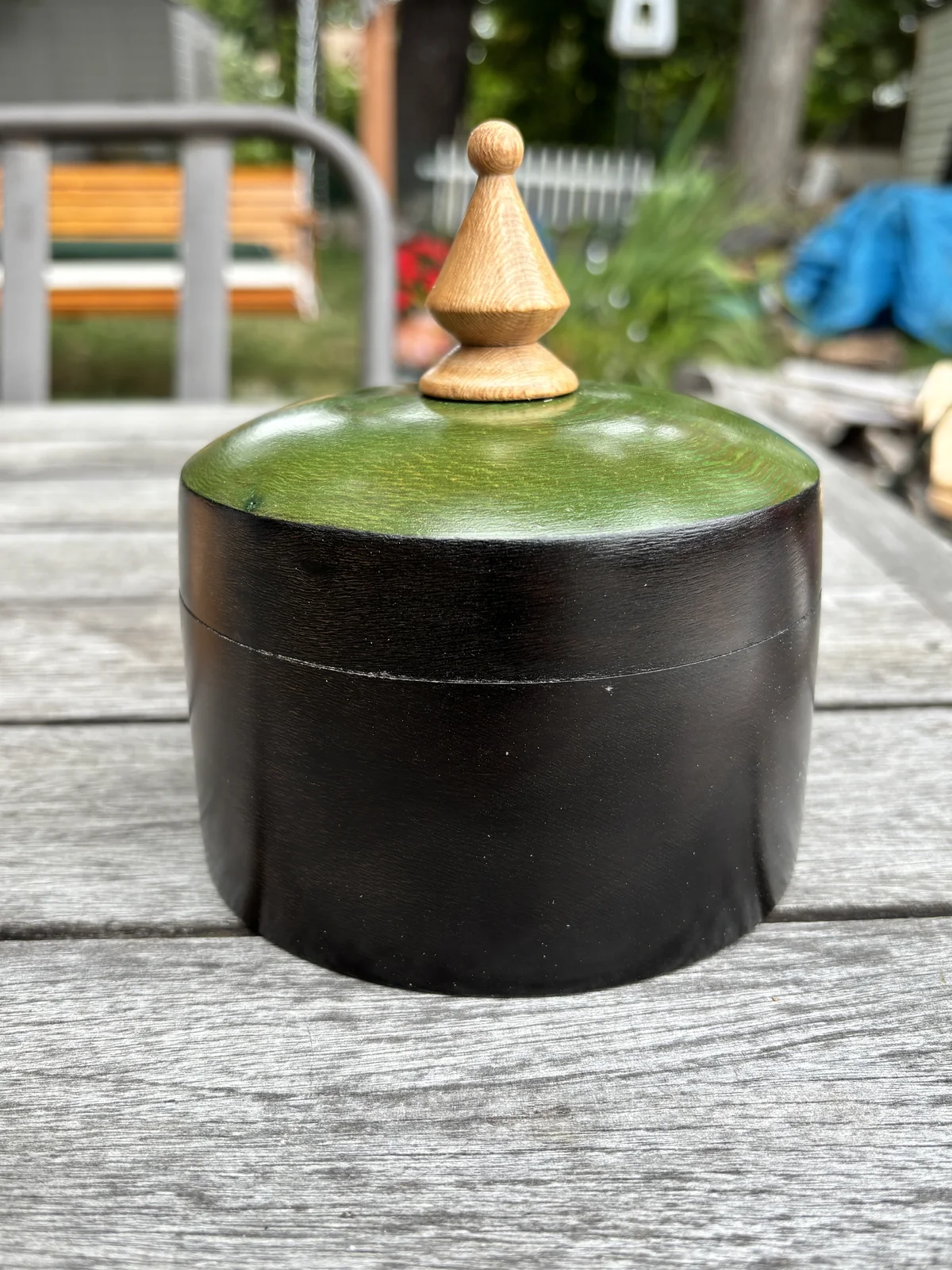
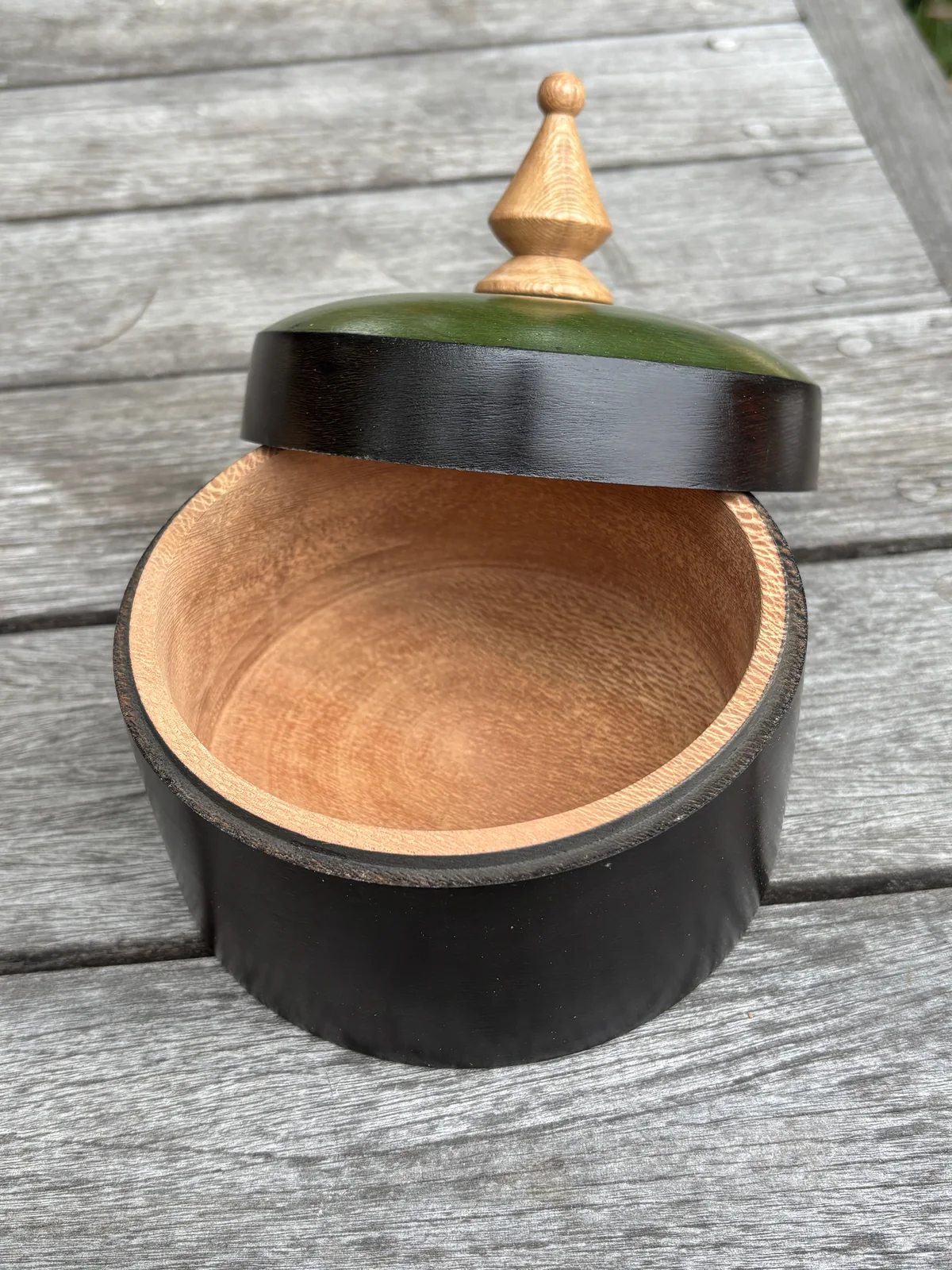
Use ebonizing selectively rather than turning everything black. A dark rim, edge, outer surface, or detail can frame the vivid natural color of Purpleheart, Osage Orange, Yellowheart, or Padauk. The black helps the bright wood stand out. Test first: these woods vary in tannin content, and a tannin wash may be needed.
The confirmed 14-wood class roster: Cherry, Red Oak, Maple, Sapele, Walnut, White Oak, Hickory, Mahogany, Osage Orange, Kiaat, Padauk, Purpleheart, Jatoba, Black Limba.
Each class wood uses the same three-part comparison. Label matching samples, keep preparation comparable, and record the dried results before finishing. The partial-shellac piece adds a barrier comparison to the chemistry explained in the handout.
Treat a bare sample with iron acetate to see how the wood's own tannins respond. Let the reaction develop and dry before comparing it.
Wet the surface fibers with a Quebracho tannin wash, allow it to dry, then apply iron acetate. Compare this added-tannin sample with the iron-only sample.
Seal only part of a matching piece with shellac before treatment, leaving another area bare. Compare the protected and exposed areas to explore a barrier and a selective boundary. Record the shellac application and treatment sequence; do not assume a perfect barrier.
Results vary with species, individual trees, heartwood and sapwood, and even two boards of the same species. The tannin descriptions below are practical guidance from the syllabus, not a laboratory ranking or a promise of color. Test matching scraps before treating a finished piece.
Syllabus expectations and test plans are separate from recorded observations. Photos are labeled as class trials or finished-work references.
Confirmed class wood
Tannin reference: Moderate–high
Cherry is described as having a good but variable reaction. Test the same board across the three treatments to make a more useful comparison than mixing unrelated scraps.
Recorded observations have not been published yet.
Confirmed class wood
Tannin reference: High
Red oak is also listed as high in tannin with a usually excellent ebonizing response. Its own test set stays separate from white oak so differences are not lost.
Recorded observations have not been published yet.
Confirmed class wood
Tannin reference: Very low
Maple usually needs added tannin for a strong black. It is a useful class comparison because more iron alone may not solve a lack of tannin.
Recorded observations have not been published yet.
Confirmed class wood
Tannin reference: Moderate
Sapele has a variable ebonizing response in the guide. Compare all three samples and observe how darkening interacts with the wood's visible grain and form.
Recorded observations have not been published yet.
Confirmed class wood
Tannin reference: High — black walnut
Black walnut is a tannin-rich wood. The syllabus describes a strong reaction that is often very dark, making it useful for comparing native tannin with an added-tannin treatment.
Recorded observations have not been published yet.
Confirmed class wood
Tannin reference: High
The syllabus describes white oak as high in tannin and usually excellent for iron ebonizing. Preserve visible grain while comparing native tannin, added tannin, and the partial-shellac boundary.
Recorded observations have not been published yet.
Confirmed class wood
Tannin reference: Low–moderate
Hickory often benefits greatly from added tannin. Its three-way comparison helps show whether supplying tannin changes the depth of the reaction.
Recorded observations have not been published yet.
Confirmed class wood
Tannin reference: Moderate
Mahogany's response is variable in the guide. Document the material used and compare the bare, added-tannin, and partial-shellac test pieces before choosing a treatment for finished work.
Recorded observations have not been published yet.
Confirmed class wood
Tannin reference: Test on the class sample
Osage Orange is one of the vivid woods discussed for selective contrast in the handout. Compare a darkened detail with retained natural color instead of assuming the whole piece must become black.
Recorded observations have not been published yet.
Confirmed class wood
Tannin reference: Not ranked in this syllabus
Kiaat is part of the class experiment. The handout does not rank its tannin content, so this library will document the three actual test pieces rather than assume a particular color or strength of reaction.
Recorded observations have not been published yet.
Confirmed class wood
Tannin reference: Test on the class sample
Padauk's vivid natural color can be framed by an ebonized edge or detail. The class comparison explores darkening and selective contrast without promising a fixed reaction.
Recorded observations have not been published yet.
Confirmed class wood
Tannin reference: Test on the class sample
Purpleheart is another bright wood named in the handout's selective-contrast examples. Test dark boundaries alongside visible natural color, then compare all three class treatments.
Recorded observations have not been published yet.
Confirmed class wood
Tannin reference: Not ranked in this syllabus
Jatoba is included in the class roster. Use the bare, added-tannin, and partial-shellac samples to build an observed reference for this wood; the supplied handout does not assign it a tannin ranking.
Recorded observations have not been published yet.
Confirmed class wood
Tannin reference: Not ranked in this syllabus
Black Limba is part of the three-way class comparison. Document its particular grain, treatment sequence, and dried color rather than assigning an outcome not given in the handout.
Recorded observations have not been published yet.
After the final treatment has dried and the desired color has developed, a mild baking-soda rinse may help neutralize residual acidity. It is not always required; test compatibility with your intended finish.
The guide uses 1 tablespoon baking soda dissolved in 1 quart water. Lightly wipe or brush it on—do not soak the wood—then lightly wipe with clean water to remove residue.
Let the wood dry completely before finishing. Distilled water is preferred for consistency; clean tap water is acceptable unless unusually hard or mineral-rich.
Sequence: Ebonize → let the reaction finish → neutralize if needed → clean-water wipe → dry completely → finish.
Wear gloves and eye protection. Label solutions, use separate cups and brushes for iron and tannin, and never return used liquid to storage. Gas can form while vinegar and steel wool react: keep the container vented or loosely covered, never tightly sealed, and away from flames, sparks, and other ignition sources.
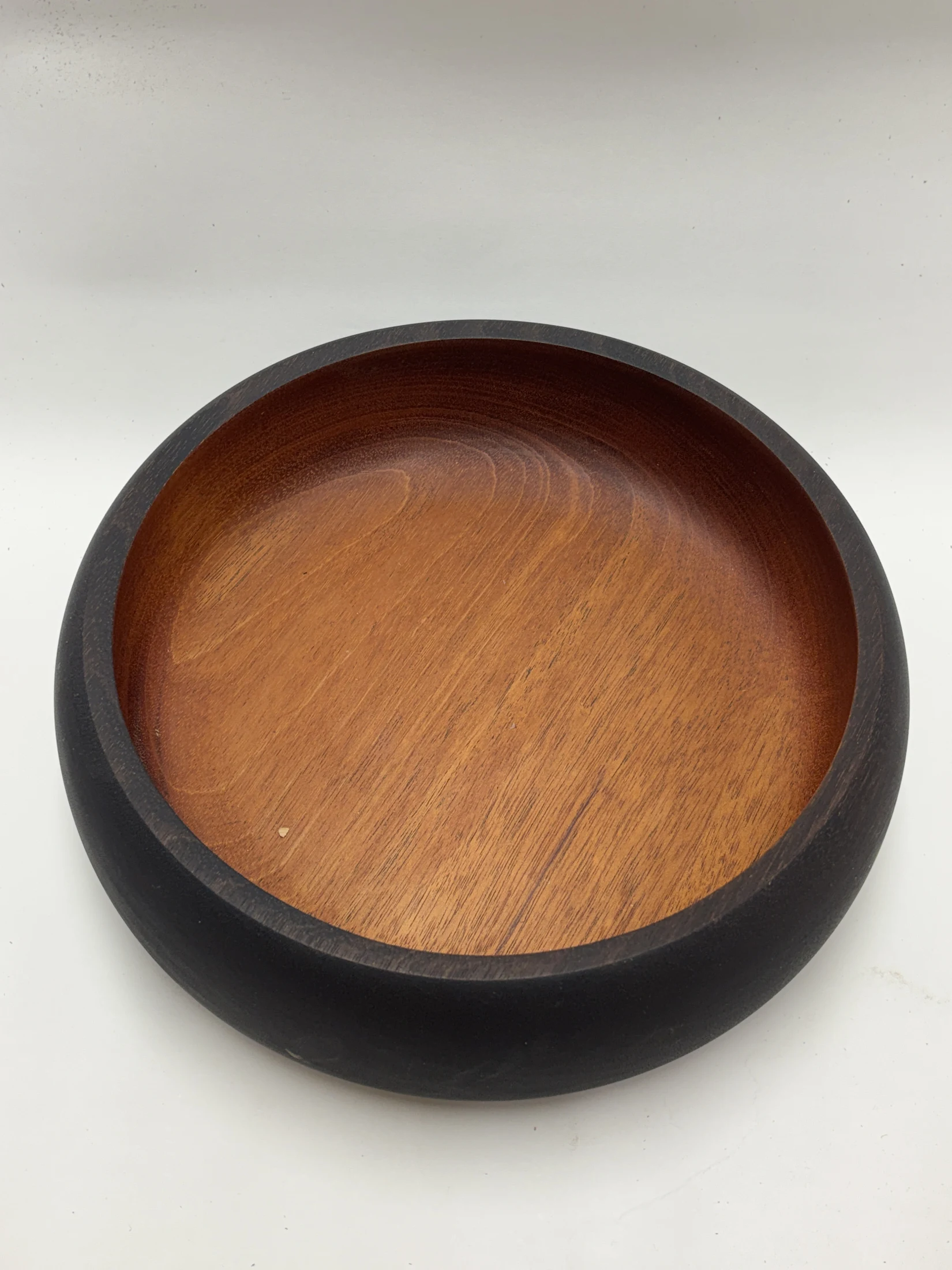
Real finished-work references from Gaia's Woodcrafts. These photos illustrate selective darkening and natural-wood contrast; they are not controlled class trial results.
Back to Gaia's Woodcrafts · Ask about ebonizing or a custom piece